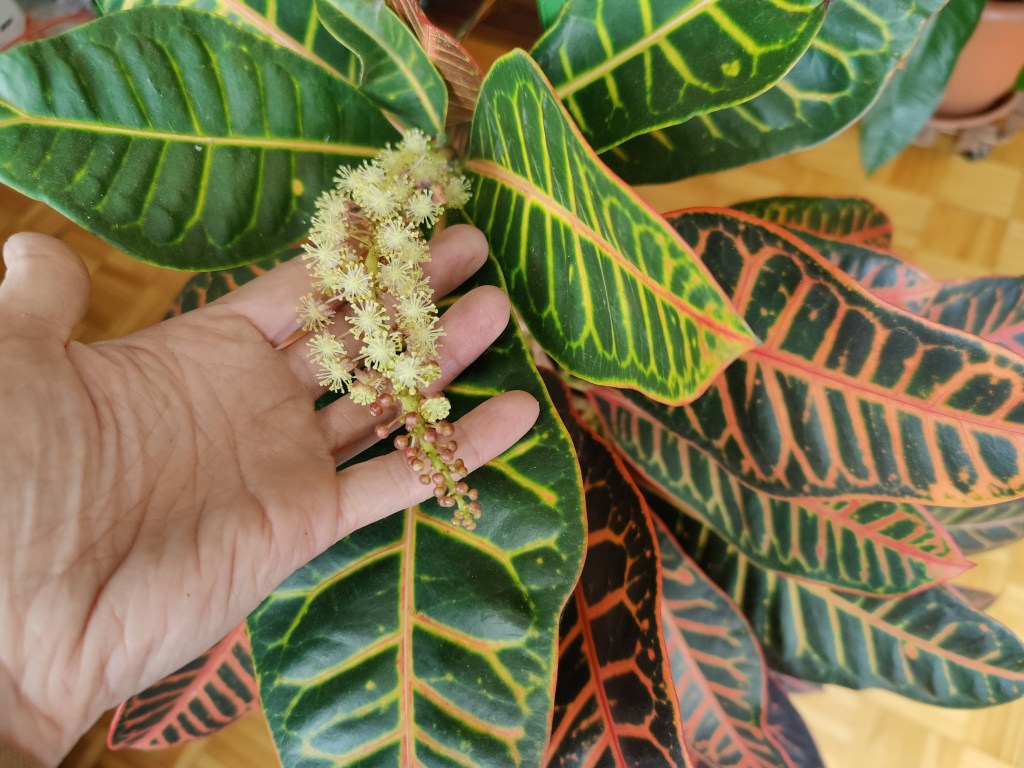
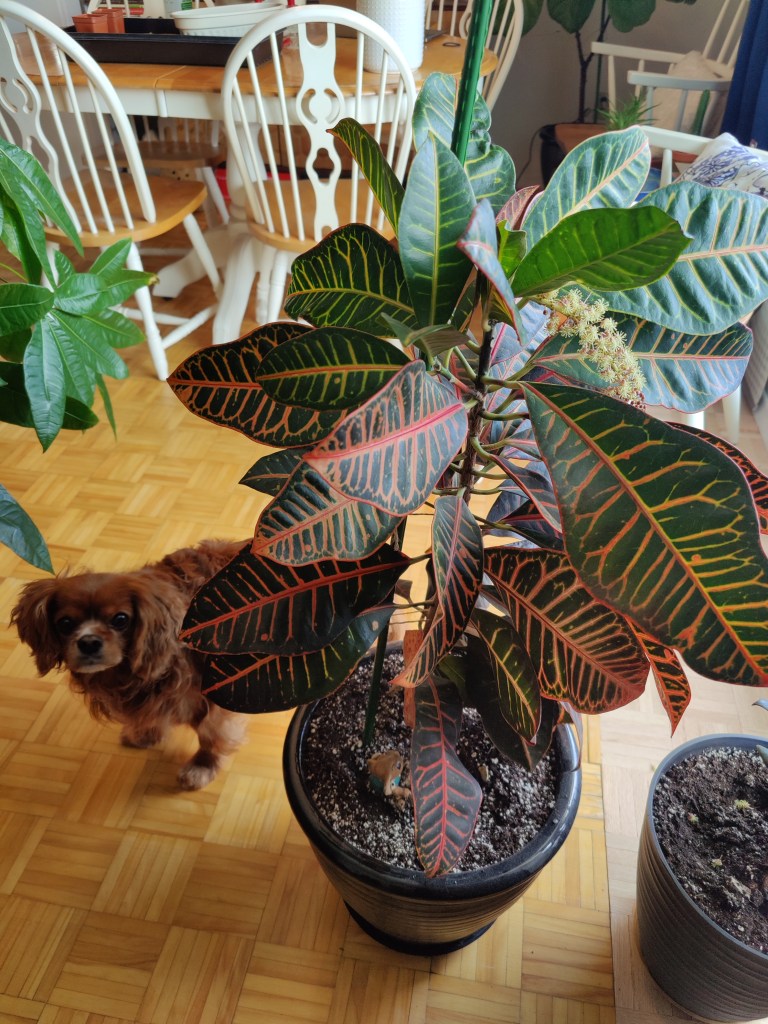
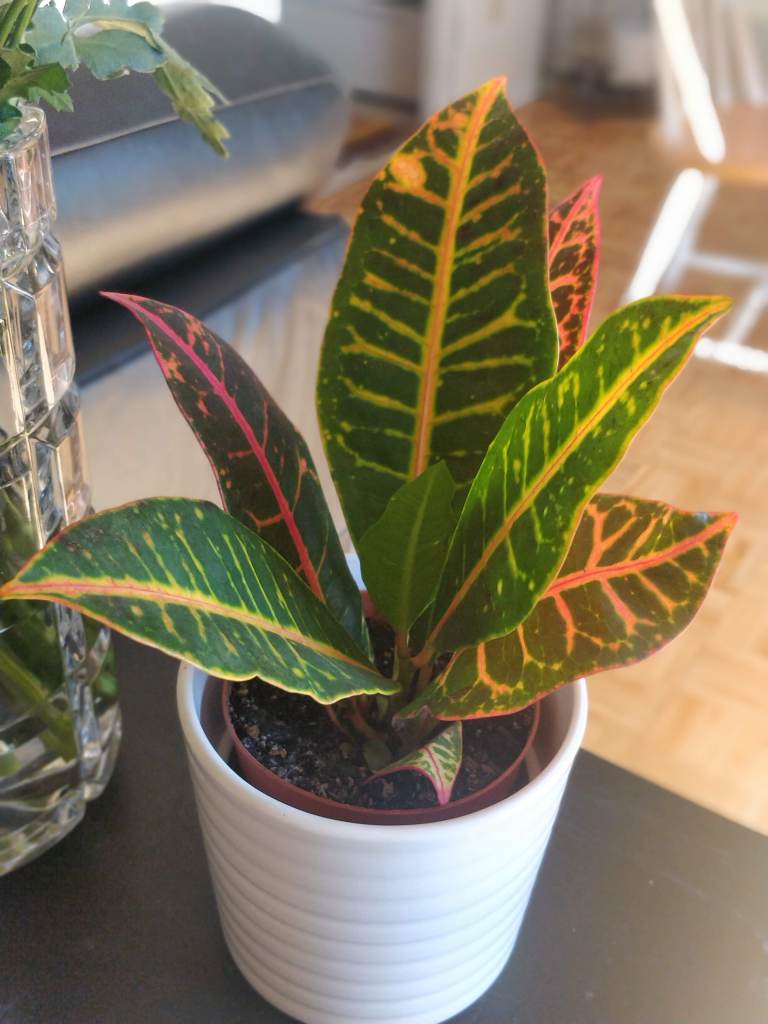
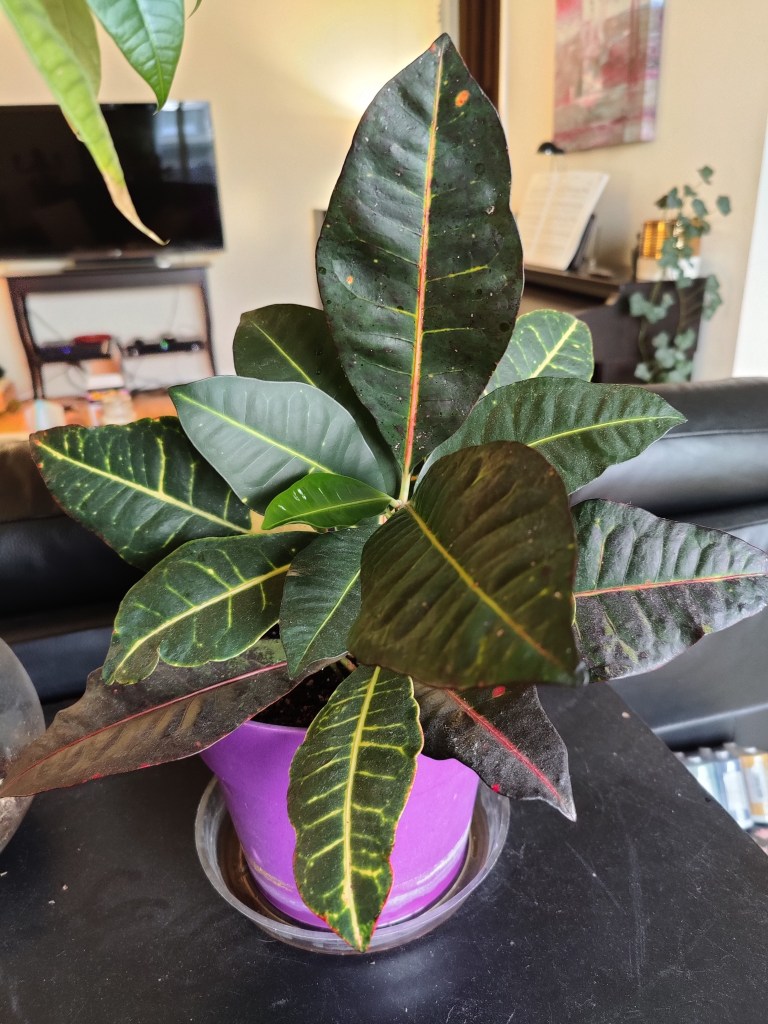
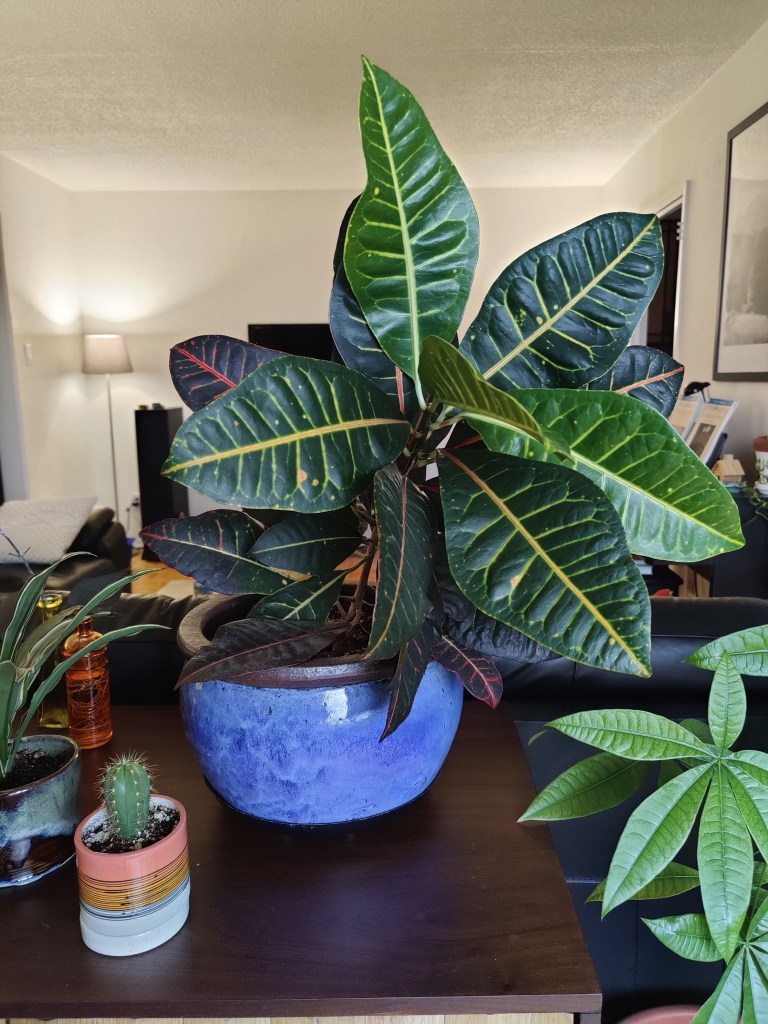
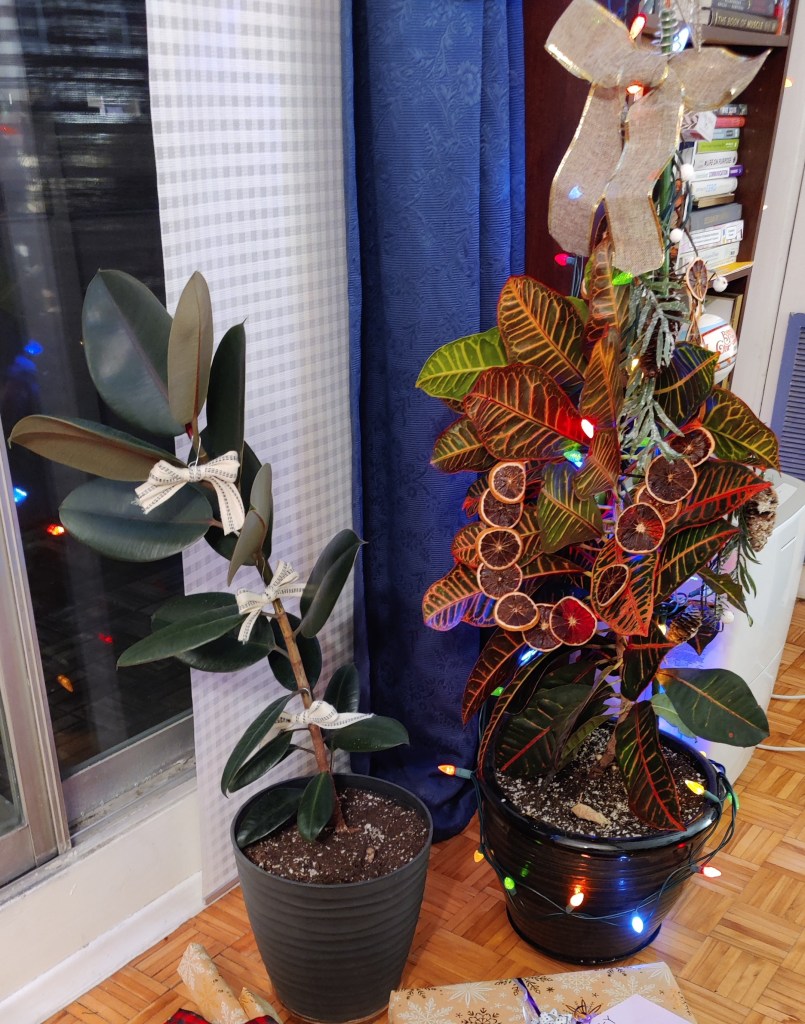
I purchased a croton as a birthday gift to myself in March 2020. The exciting news is that today, exactly 5 years later, my croton is flowering. A cause for celebration, as I’ve read that this particular plant rarely flowers when grown indoors as a tropical houseplant.
To celebrate the life of my 5-year old croton and this rare occasion, I’ve tapped into my inner poet to write a piece about the budding life (pun intended) of this dear houseplant.
And yes, to your delight or dismay, it has come to the point of this gardening journal we’re I’m personifying my plants. Good luck readers.
An Ode to My Croton
My dearest croton, bold and bright, gold and red streaks, what a true delight. Your painted leaves, nimble and free, With fiery moves that I love to see.
As you grow each vein so true, You are a tapestry in sunlit hue. You stand with pride, night and day, At times, dressed oh so tacky on display.
And when you bloom—its rare and sweet, A lovely gift, if but a moment’s treat. How you’ve grown, with colours so deep, An aging soul, in my heart you’ll keep.
Now, the real question is: Can I do anything with these little flowers? I welcome your insights and ideas in the comments.
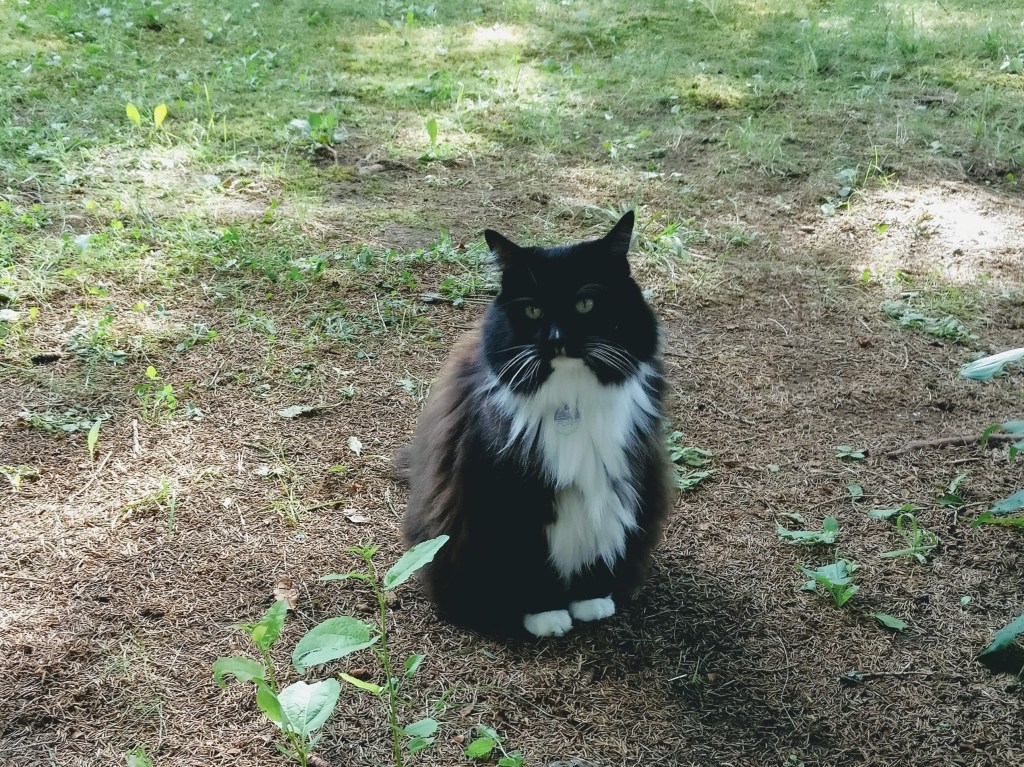
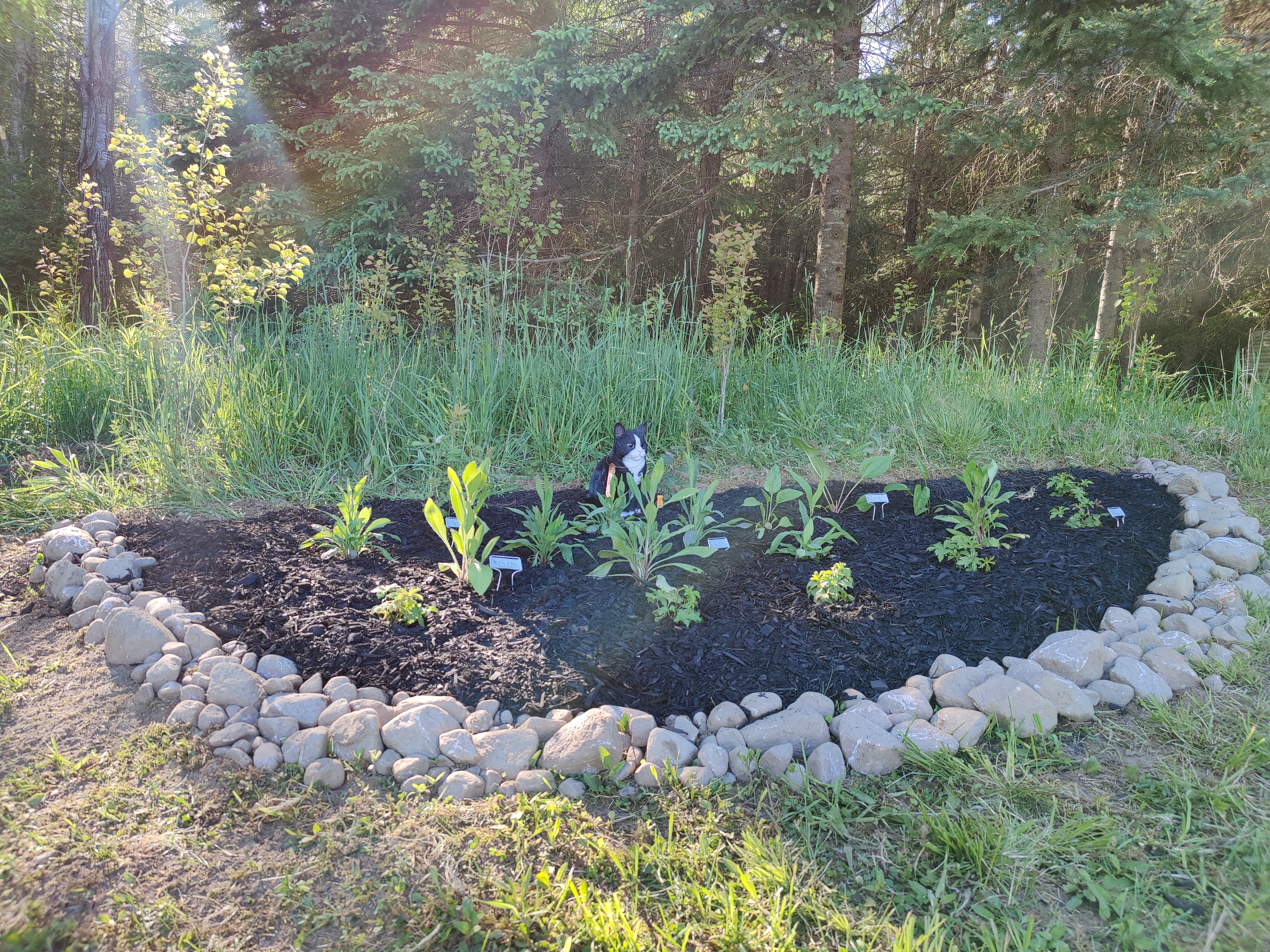
In February 2021, our world shifted when we said goodbye to our beloved cat, Zara, a constant companion whose playful spirit brought light to our lives. She had a favourite spot in our yard, where she would spend hours chasing mice and basking in the sun. That spring, as a way to honour her memory and find solace, I decided to transform her special corner into a native tribute garden.
The Birth of a Tribute
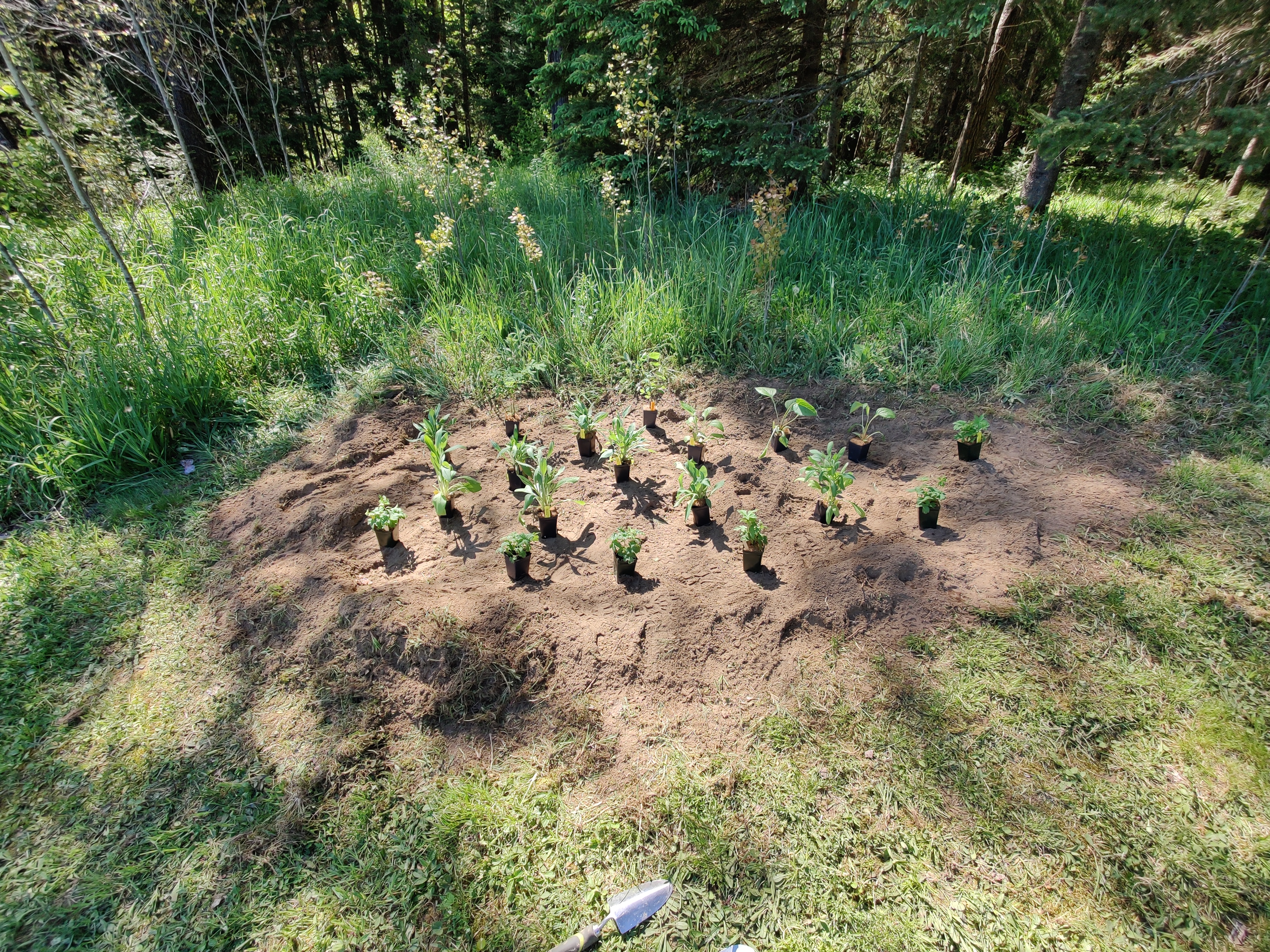
Tilling the soil for the first time in the spring of 2021 was a freeing experience. I knew I wanted this garden to be more than just a memorial—I wanted it to celebrate life and support the natural ecosystem she had been a part of. Over time, this garden grew into a wider tribute to more beloved family members we lost later that year, creating a sanctuary of collective memory and healing.
The pièce de résistance was our gifted cat statue.
I chose to plant species native to our region. These plants not only thrive in the local environment but also provide crucial habitat and food for pollinators and other wildlife. My selections included:
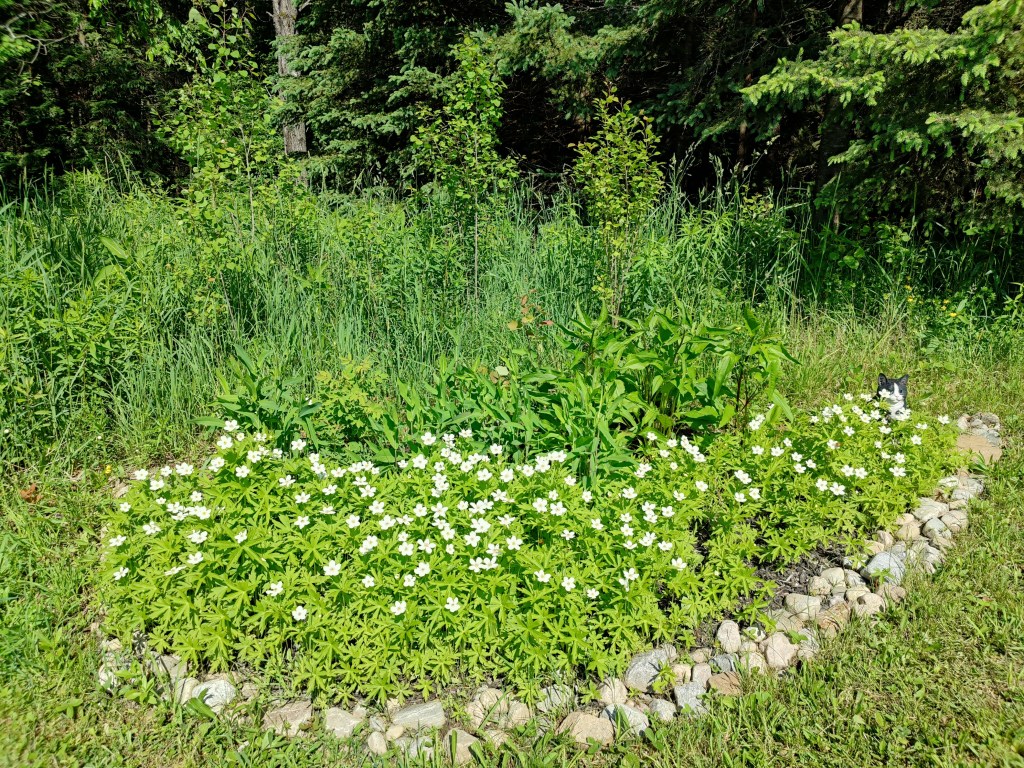
Canada anemone,
black-eyed Susans,
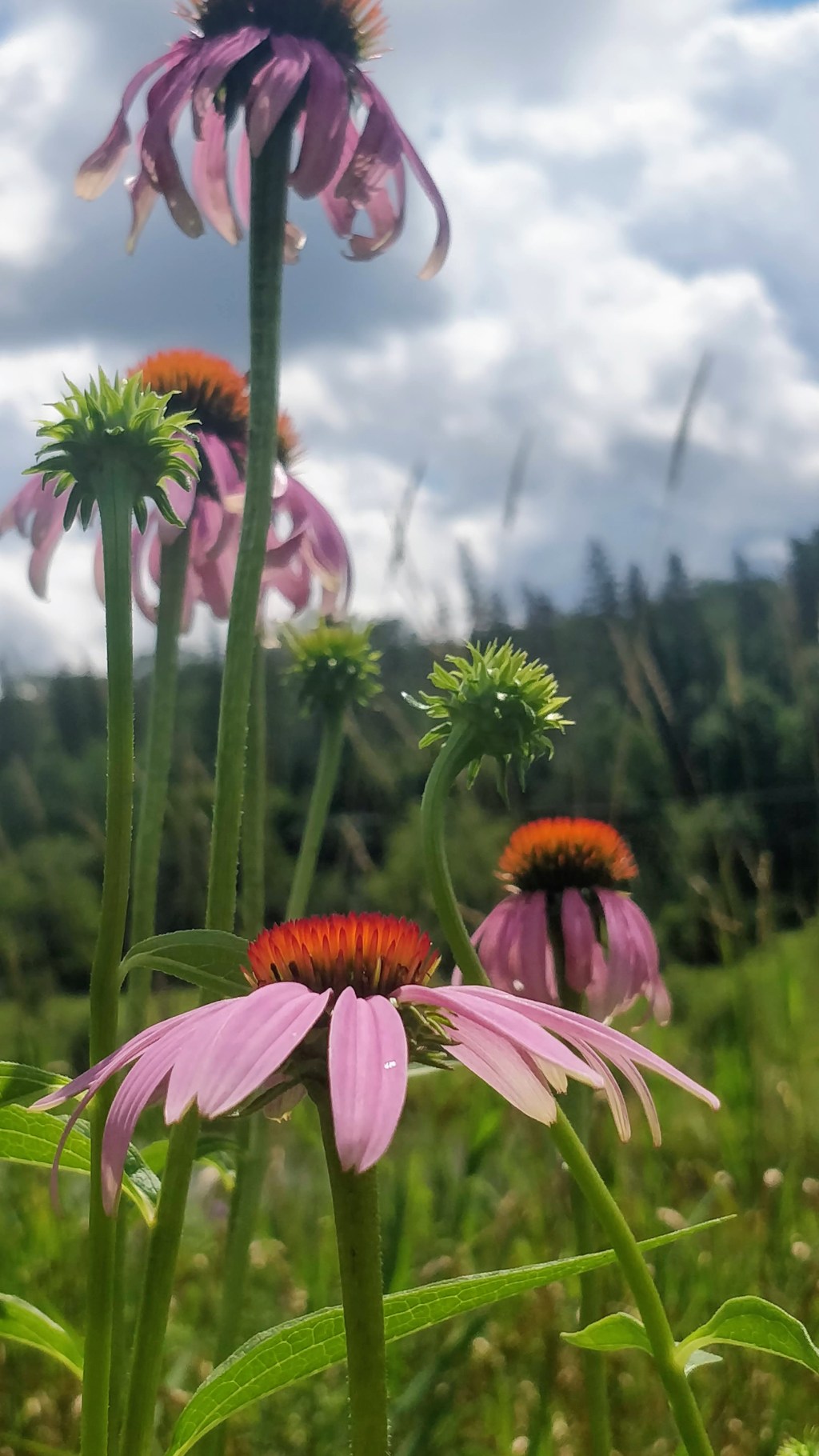
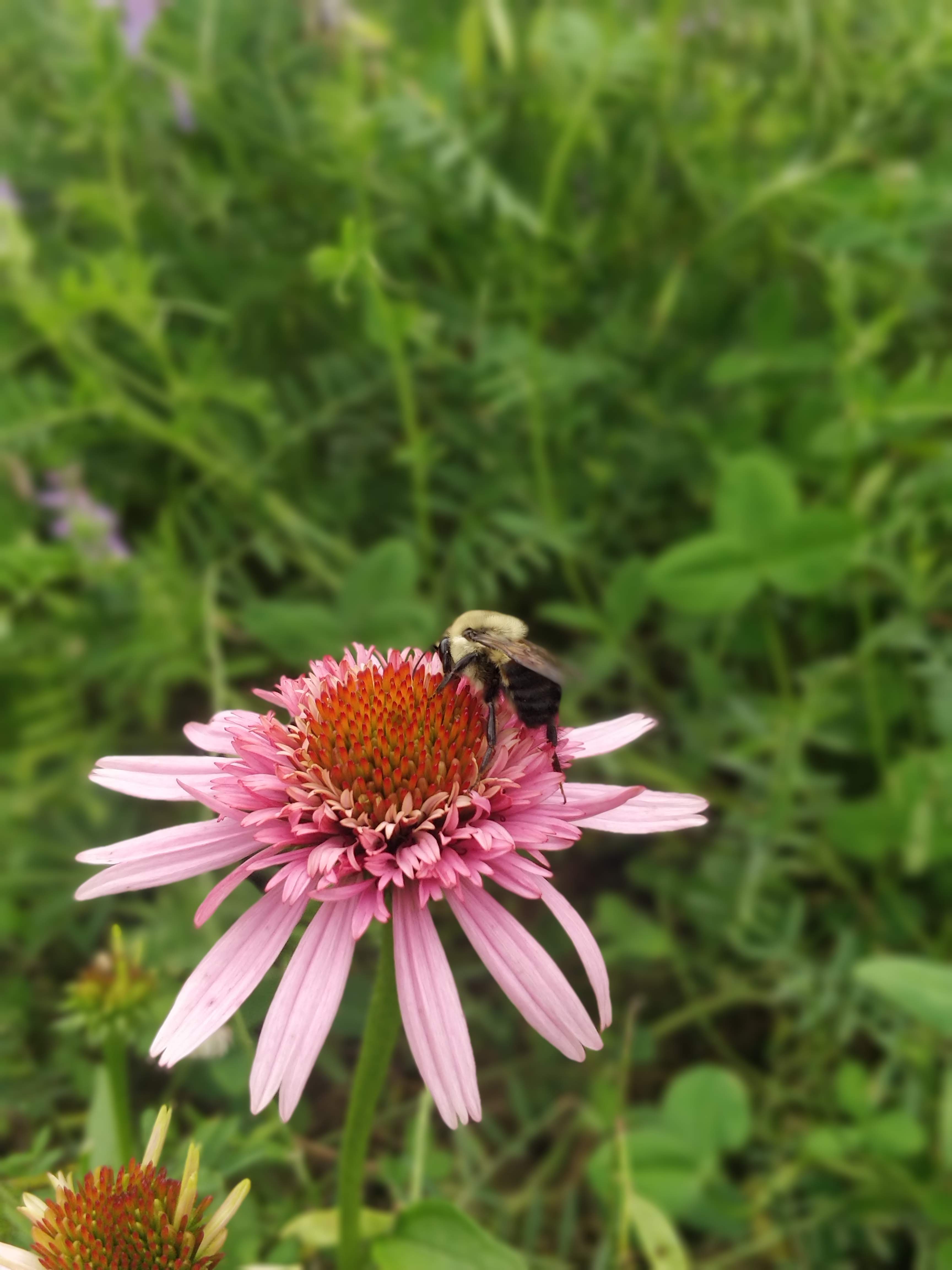
purple coneflowers,
smooth blue asters,
a smooth rose bush and
a serviceberry tree.
Each plant holds a unique beauty, and together, they create a harmonious space that changes with the seasons.
Watching the Garden Grow
Over the past few years, this garden has become a living, evolving tribute. The serviceberry tree, while still too small to blossom, stands as a promise of growth and renewal. The bright petals of the purple coneflowers burst into colour in summer, attracting bees and butterflies. In autumn, the smooth blue aster adds a final flourish before the garden rests in winter.
The process hasn’t been without its challenges. Some plants took time to establish, and learning the nuances of native gardening was a journey of its own. But each success—a bud forming, a butterfly landing, a bird visiting—felt like a message of gratitude from nature itself.
Canada anemone blossoming in June.
Sharing the Story
In 2022, I captured the spirit of this garden in a video that took second place in a North American Native Plant Society contest. Sharing the story of this tribute and its ecological significance was deeply rewarding. The recognition reaffirmed the importance of creating spaces that honour both personal memories and the natural world.
A Legacy of Love
This garden is more than a memorial; it’s a celebration of life—Zara’s, our family’s, and the countless creatures that visit this sanctuary. When I see a new bloom or hear the hum of a bee in this garden bed, I’m reminded of the interconnectedness of life and the beauty of honouring it.
If you’re considering a similar tribute, I encourage you to start small and let your heart guide you. Choose plants that resonate with your memories and support your local ecosystem. The rewards, both emotional and ecological, are immeasurable.
To see the garden and learn more about its journey, you can watch the video that brought this story to a wider audience. I hope it inspires you to create your own sanctuary of memories and life.
When we first decided to start a vegetable garden in 2021, we had no idea how much it would teach us about patience, innovation, and resilience. What began as a bare patch of earth has transformed into a thriving, off-grid oasis that brings immense joy and sustenance. Here’s how it all unfolded year by year.
2021: Breaking Ground
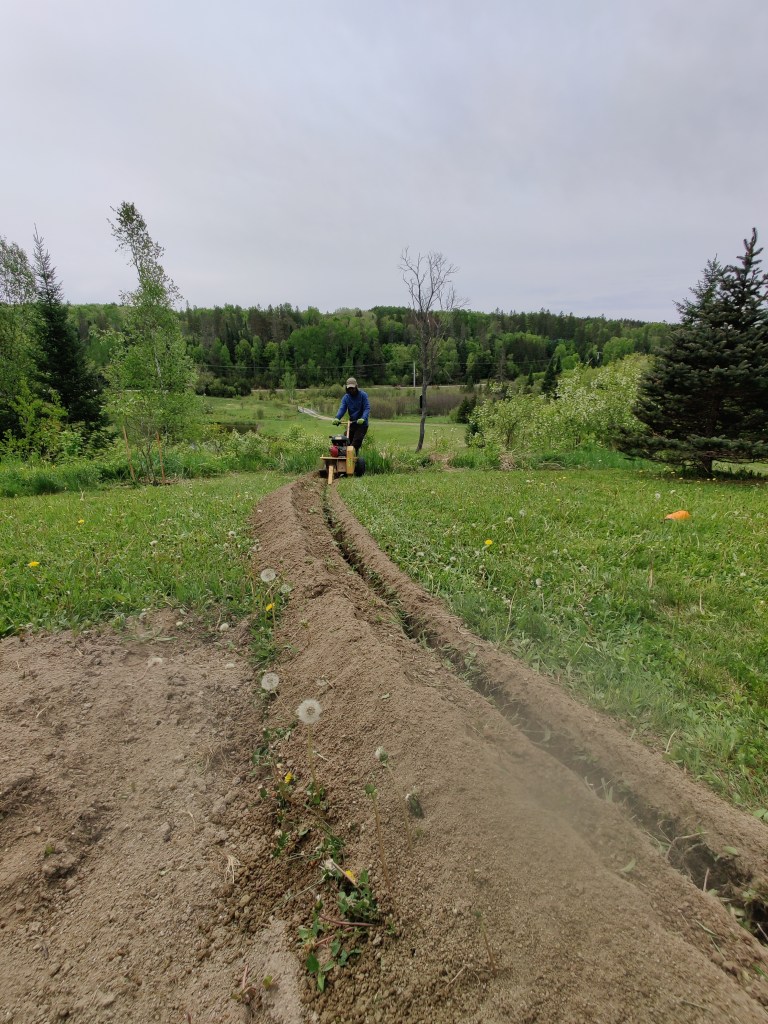
The journey started with the roar of a tiller. We broke ground that year, turning over the soil and setting the stage for what was to come. It was backbreaking work, but there was something incredibly satisfying about preparing the earth with our own hands (and some much-needed machinery). While the first year’s harvest wasn’t bountiful, it gave me a taste of what could be—and left me eager to grow more.
2022: Adding Irrigation
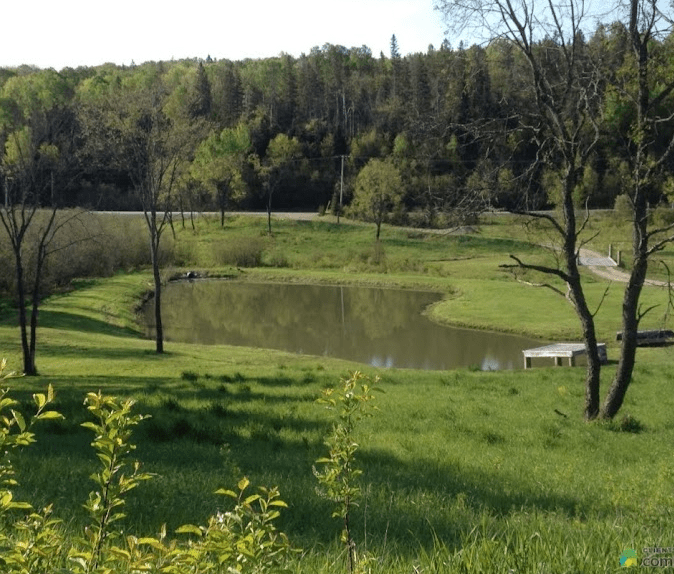
As we began planning for our second year, one thing became clear: hand-watering wasn’t sustainable for an off-grid garden at the top of a hill. So, we added an irrigation system. It wasn’t fancy, but it was effective. With the help of a generator, the irrigation line pumped water from the pond up to the garden. Running the pump became part of my routine, and the plants thrived with consistent watering. This upgrade was a game-changer, making the garden feel more manageable and efficient.
2023: Fencing and Compost
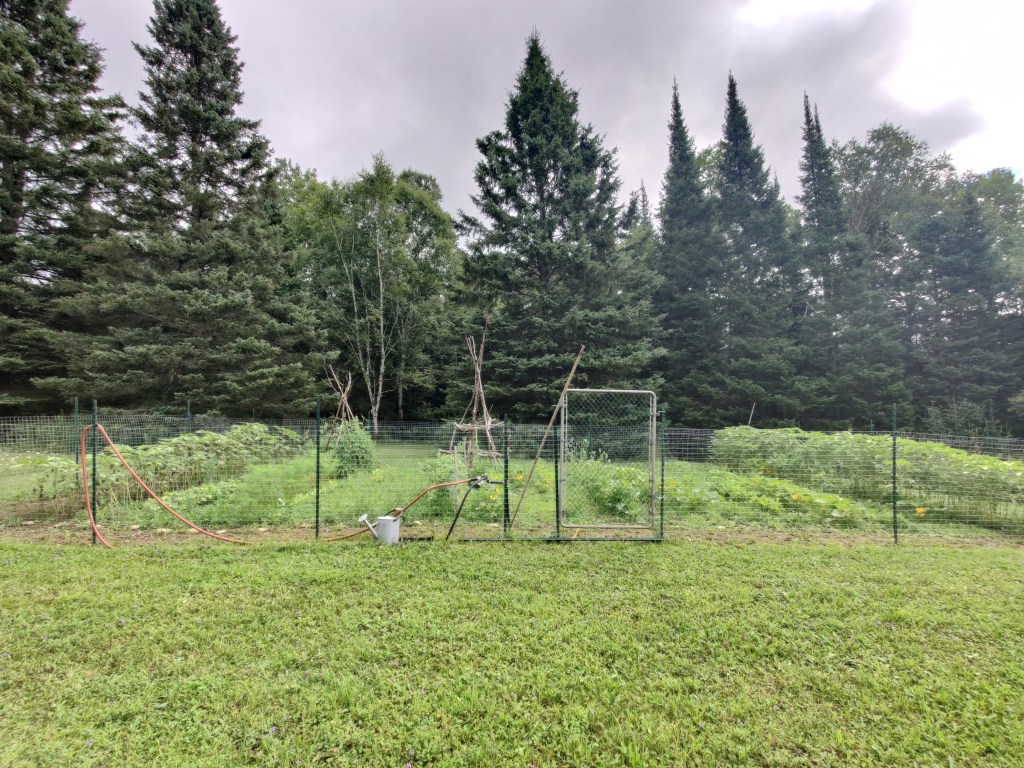
By 2023, the garden was in full swing—but so were the challenges. Determined to protect our growing crops from wildlife, we decided to add a fence. This task wasn’t without its own trials. The mosquitoes were relentless, biting at our hands as we worked, but the result was worth it: a sturdy barrier that kept deer and rabbits at bay. That same year, we added two yards of rich compost to the soil, giving my plants a nutrient boost. The combination of protection and fertility set the stage for significant growth.
2024: DIY Structures and a Bountiful Harvest
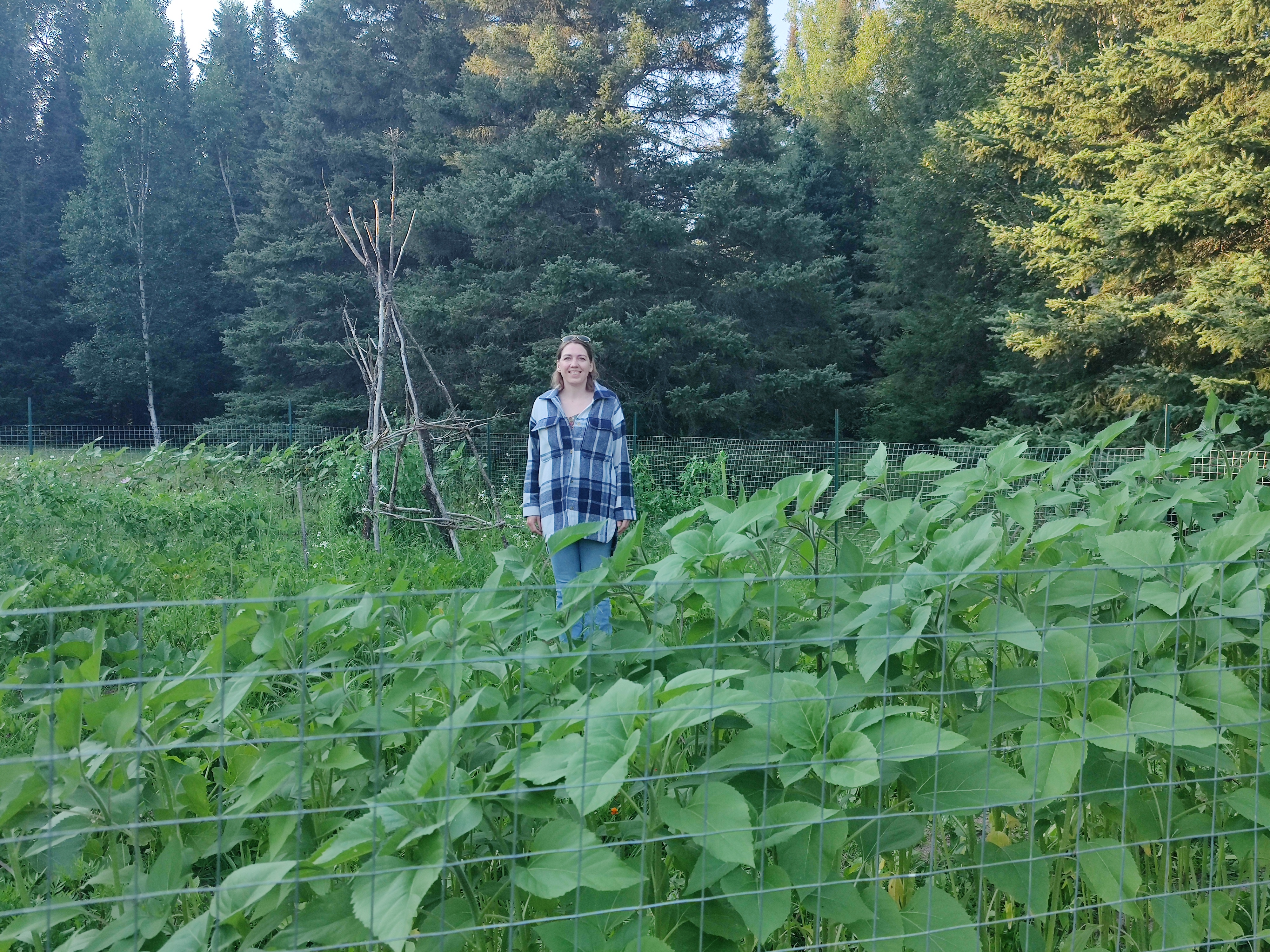
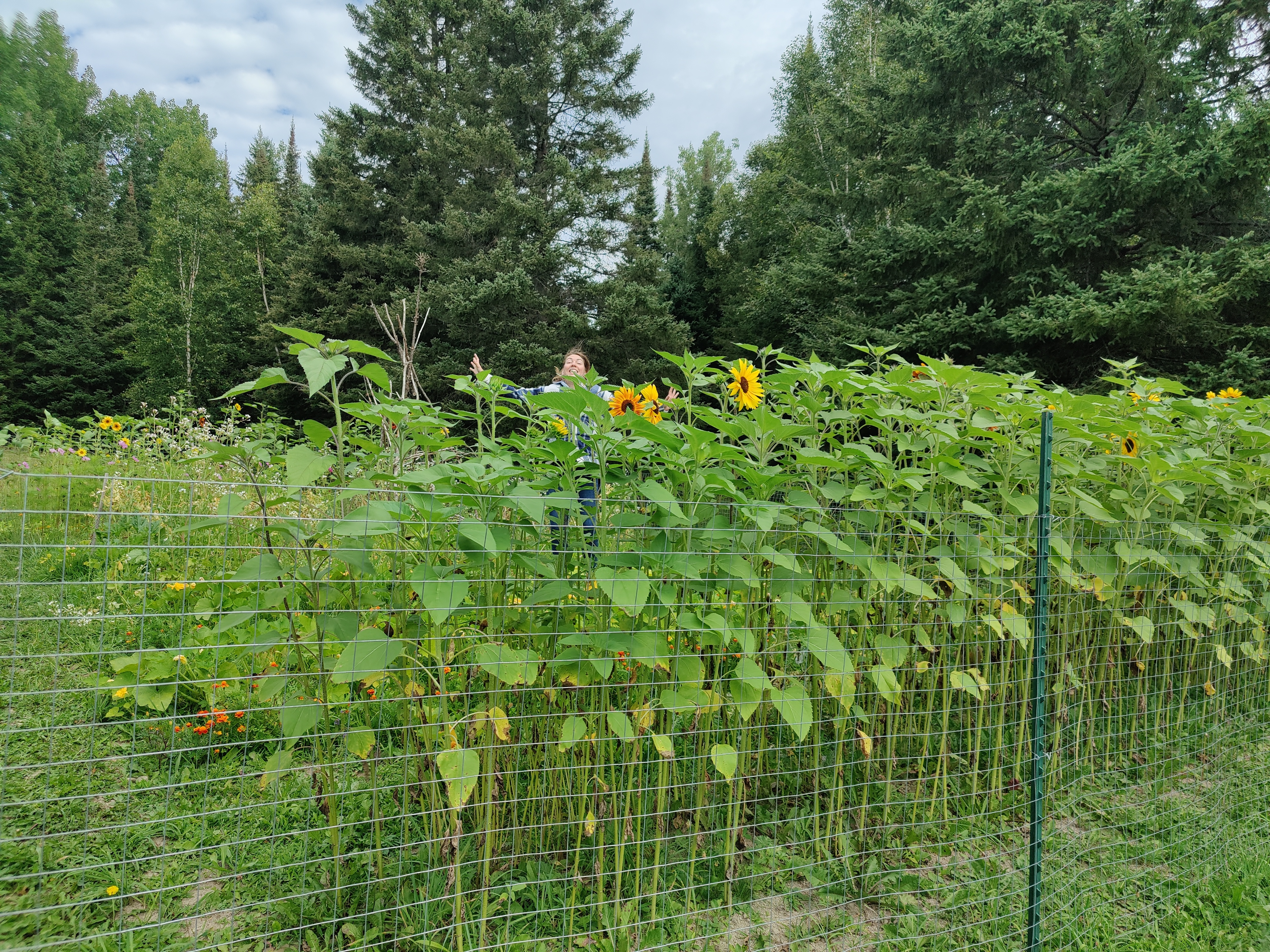
By 2024, our vegetable garden had truly come into its own. Once again, we enriched the soil with compost, knowing how vital it was to the garden’s health. I also got creative, building two DIY teepee structures for my peas and squash. These simple yet effective supports allowed the plants to climb, maximizing space and improving airflow. The result? The most successful harvest yet. Peas and other vegetables thrived (not so much the spaghetti squash), filling our kitchen with fresh produce and flowers.
Veggie garden from July 2024 to August 2024
Looking Ahead
As I reflect on these four years, I’m proud of how far the garden has come. Each addition and improvement has brought me closer to the vision we had when we first broke ground. There are still challenges ahead, but they’re part of the joy of gardening—learning, adapting, and celebrating each small success.
Here’s to many more seasons of growth, both for the garden and for myself.
As we all know, 2020 marked the beginning of tough times for humanity. Among the pandemic lockdowns, I like most, dove head first into new hobbies. I tried bread baking, painting and sewing. The one hobby that really stuck however, was my love for gardening.
While the pandemic was ultimately first and foremost a plague on humanity, there was a tiny silver lining. It caused my family to retreat to our cabins, giving me the opportunity to slow down and pay attention to myself and nature.
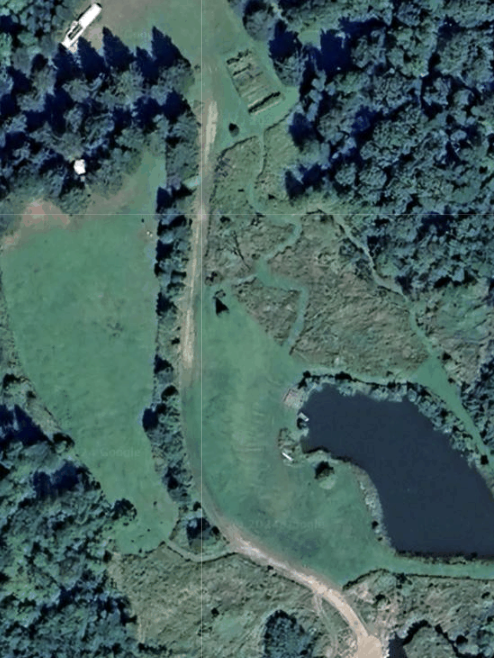
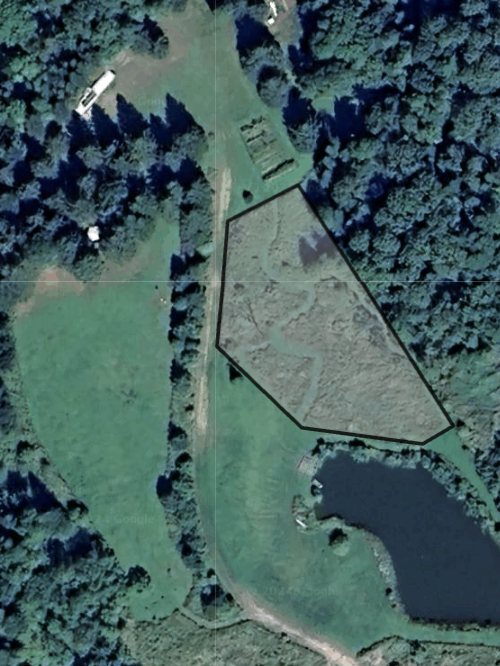
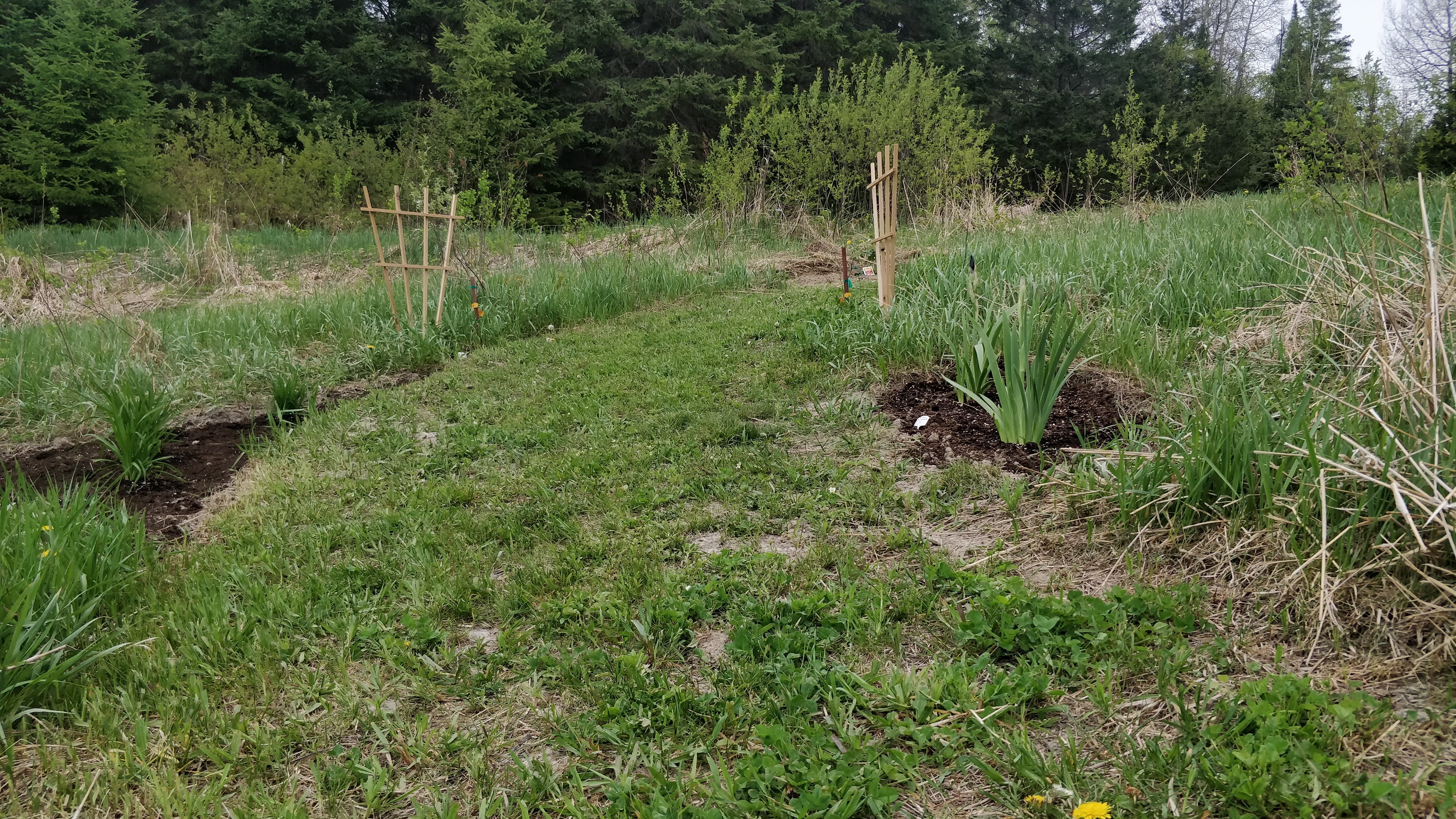
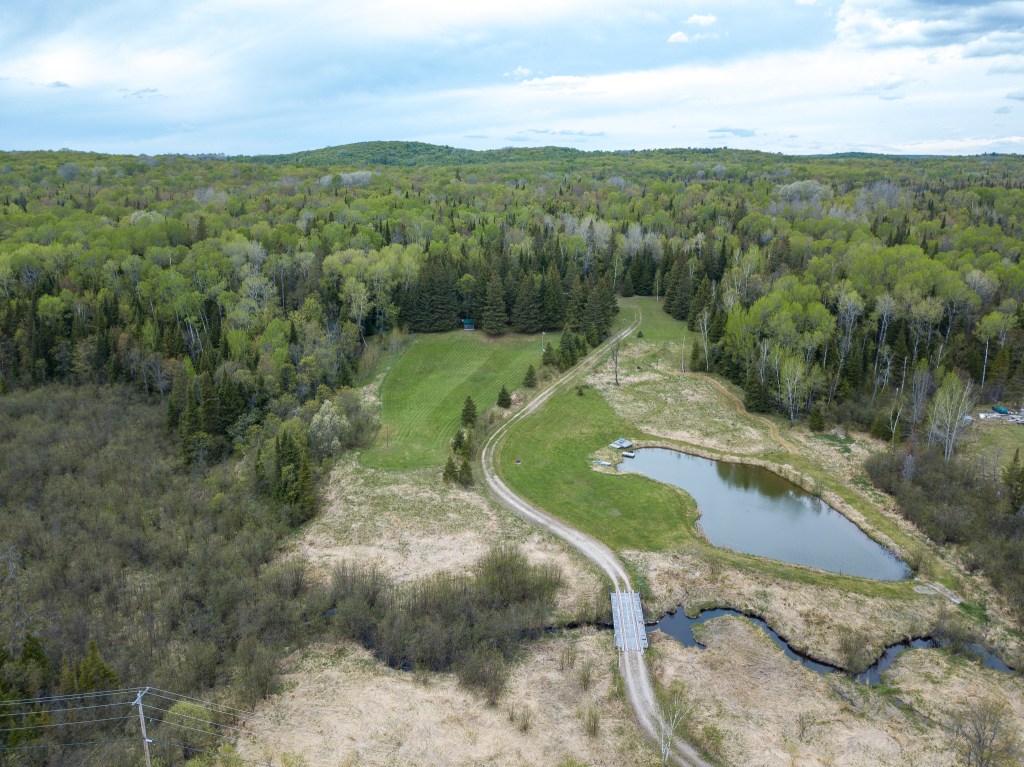
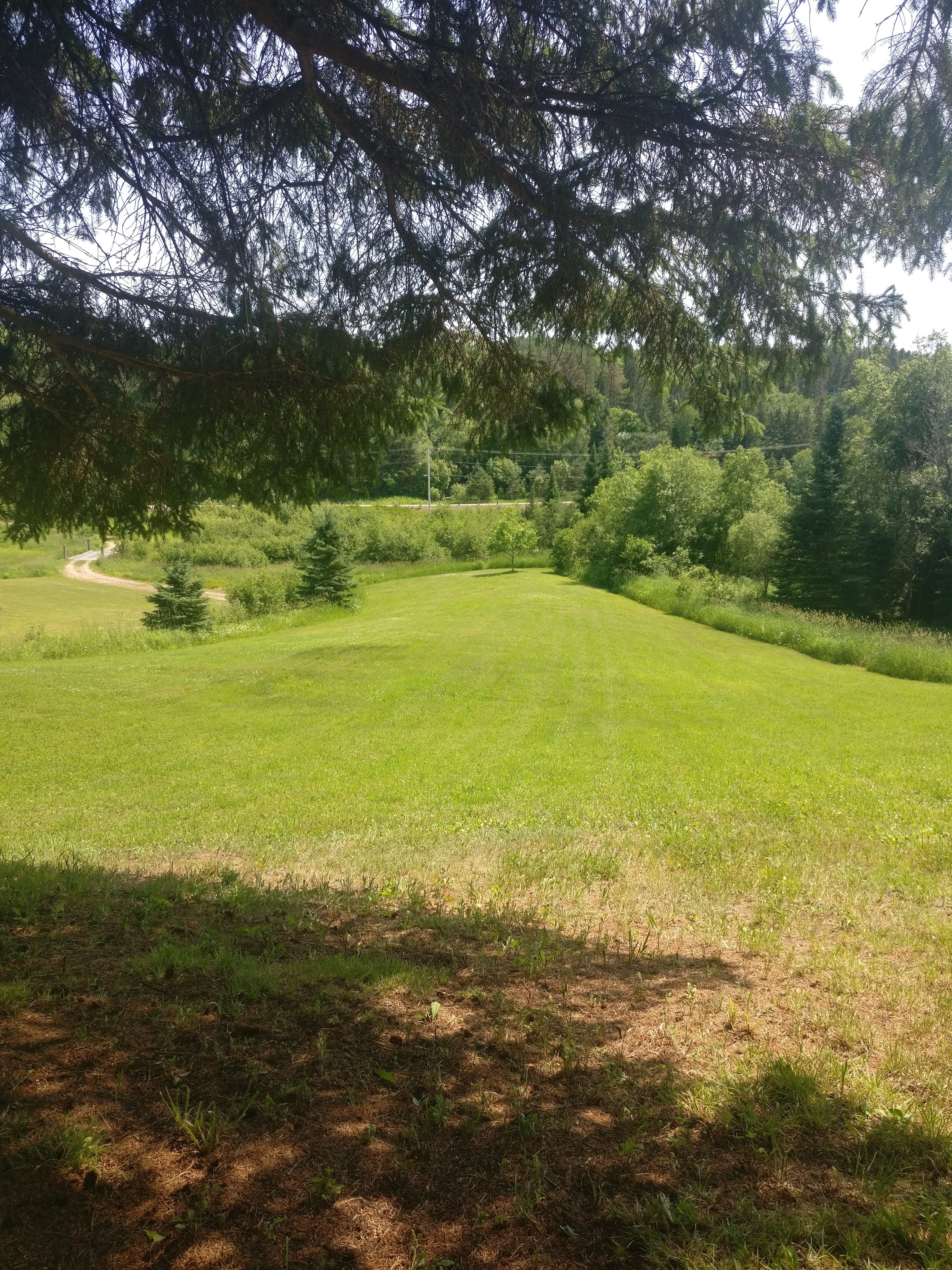
My first gardening goal was to transform our hill into a pollinator’s paradise. The area of the hill is about 1,900 meters squared. My partner mowed a path winding through the hill and I planted about five small garden beds along the path. My dream is to have a colourful cottage garden on the hill, buzzing with a variety of pollinators. It’ll take awhile, but every year I make some progress.
Aerial view of the hill with a windy path
1900m2 of blank canvas. A gardener’s paradise.
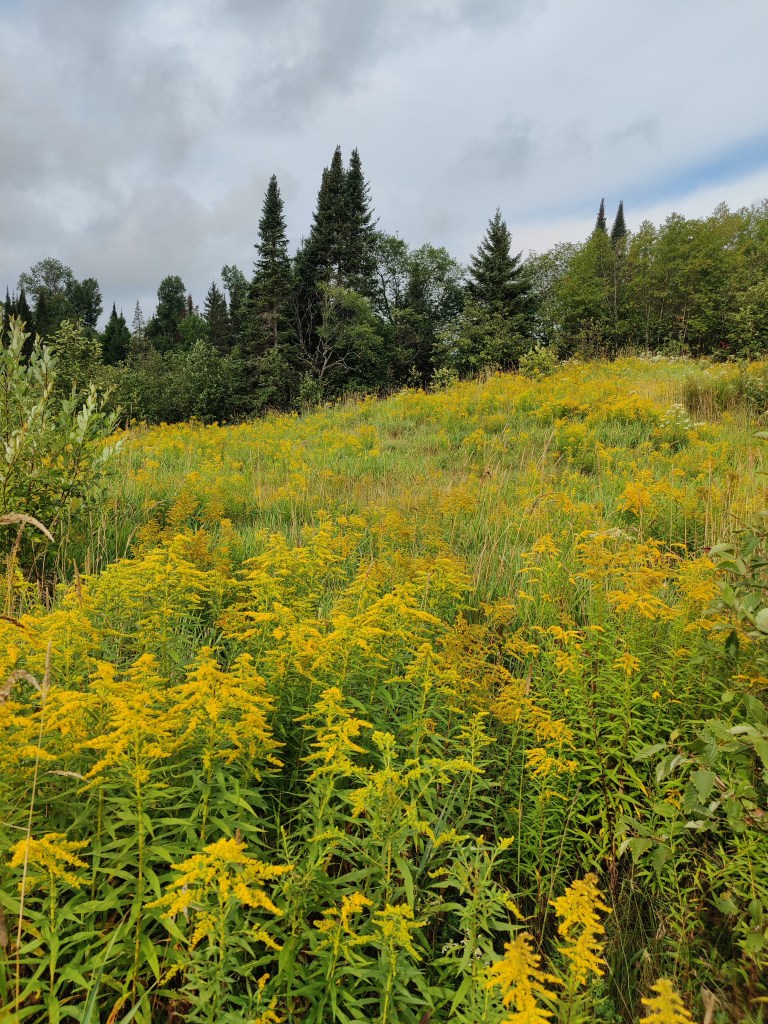
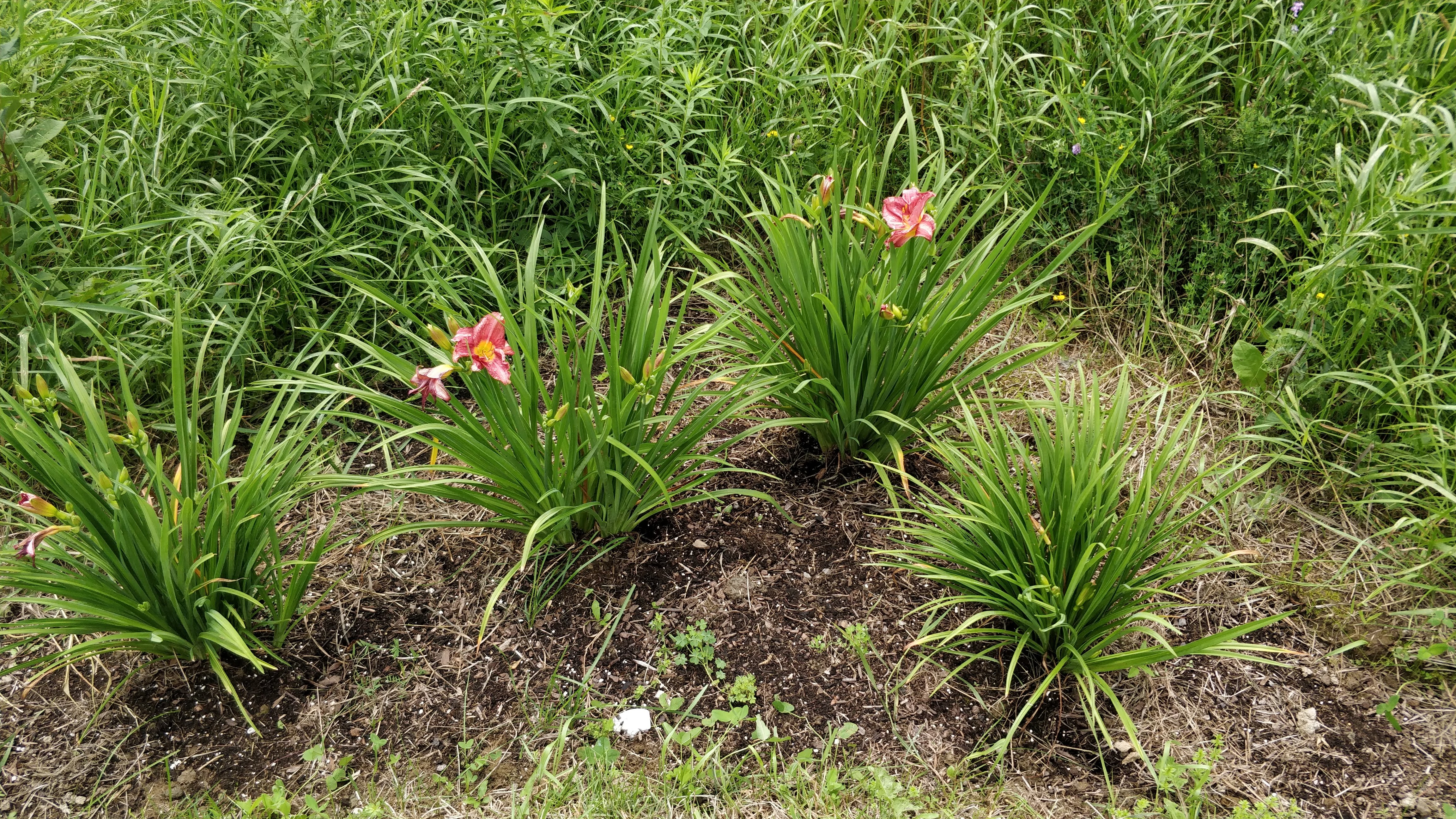
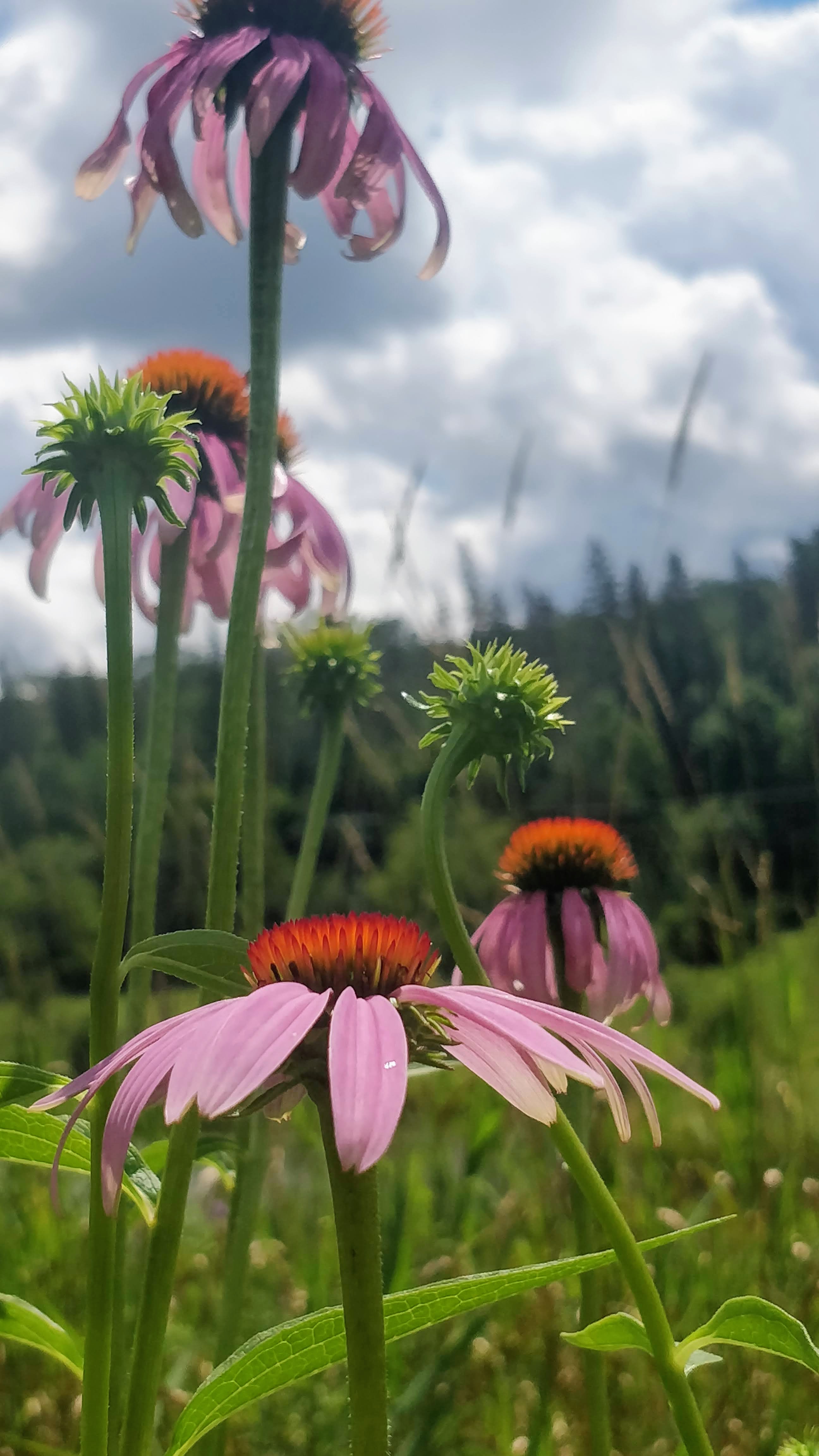
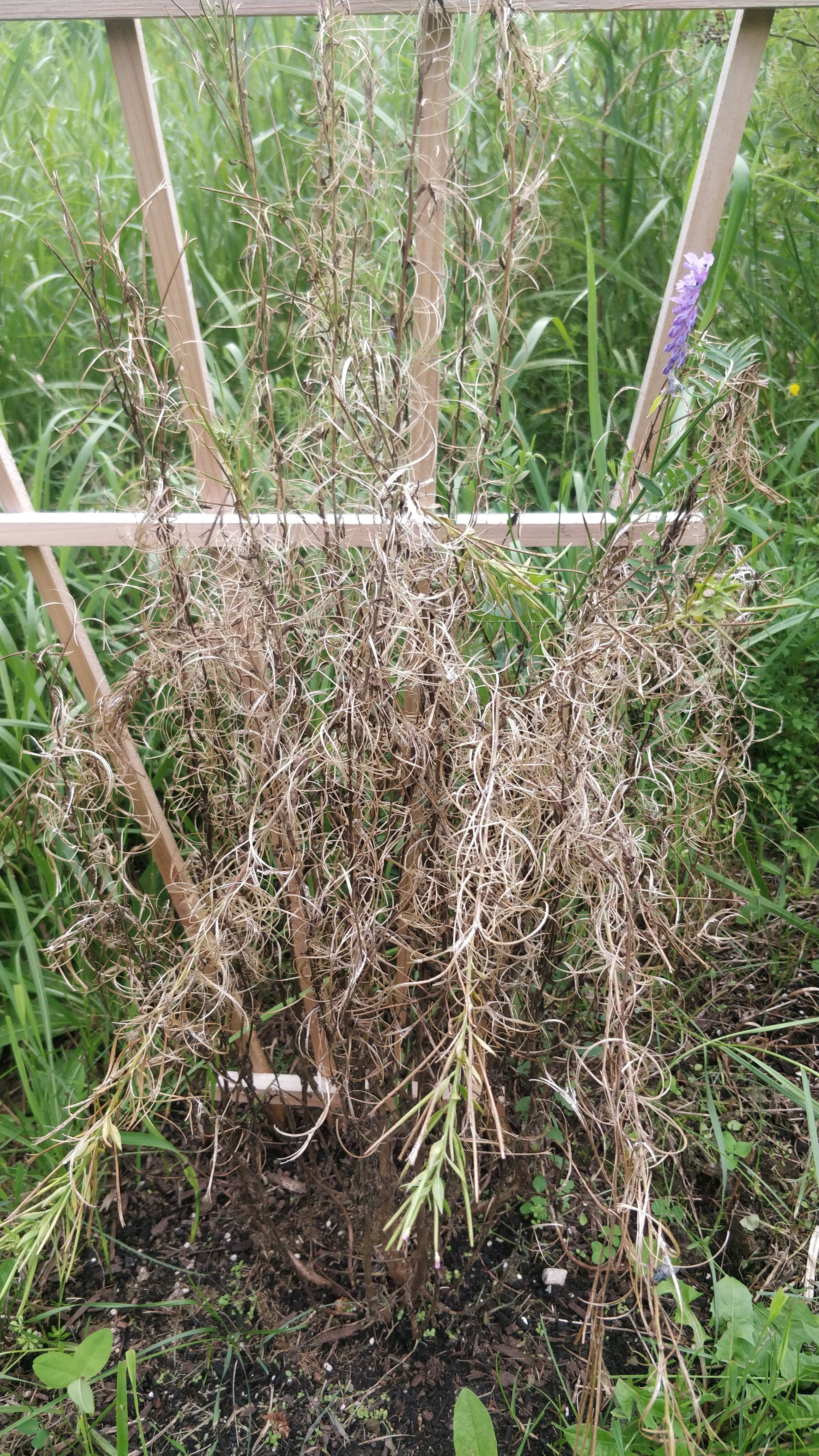
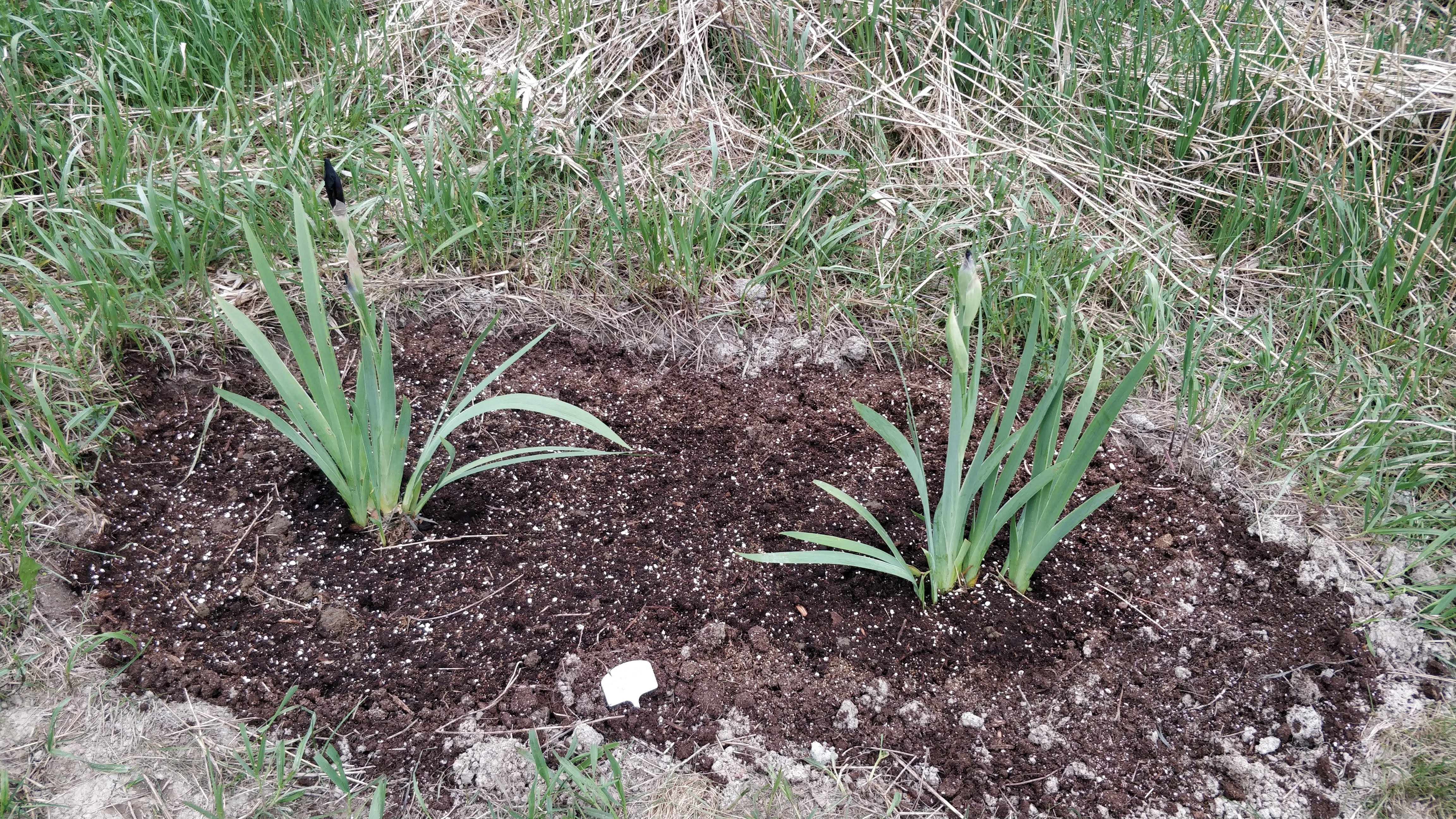
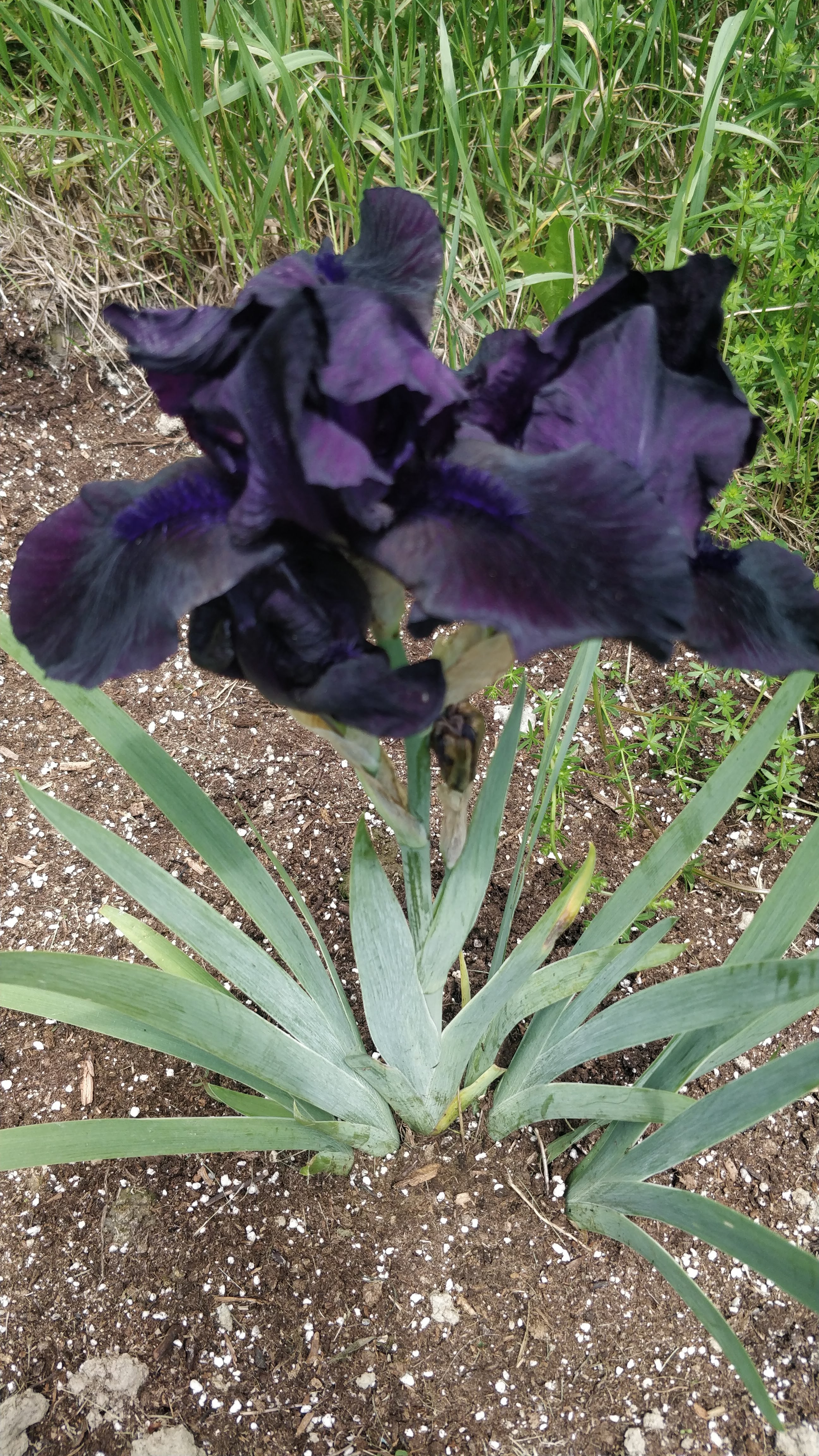
The hill already contains native plants to our area, such as chokecherries and goldenrod. I incorporated other natives like purple coneflower, black eyed susans, bee balm, smooth rose bushes, yarrow and asters. However, in the early days I planted non-natives such as day lilies, irises, grapes and a clematis (the latter of which I fried).
While most of these plants are still around, the native plants are thriving the best. One reason is because native plants don’t need as much water as their extensive root systems dig deep.
Chokecherries are native to our area.The hill flourishes with native goldenrod in the late summer months.
Here are select photos of my successes and failures on the cottage garden hill in 2020.
Though I had success with my balcony garden and houseplants, it was time to up my gardening game. In the Spring of 2018, my partner and I purchased an off-grid cabin and plot of land – a planter’s paradise. I had a fresh, blank canvas to work from!
Still pretty new to gardening but an avid plant lover, I made my first mistake. I went out and bought a plethora of plants, without a plan.
Hot tip: Learn from me. Map out your garden design plan before getting too excited and purchasing all the plants.
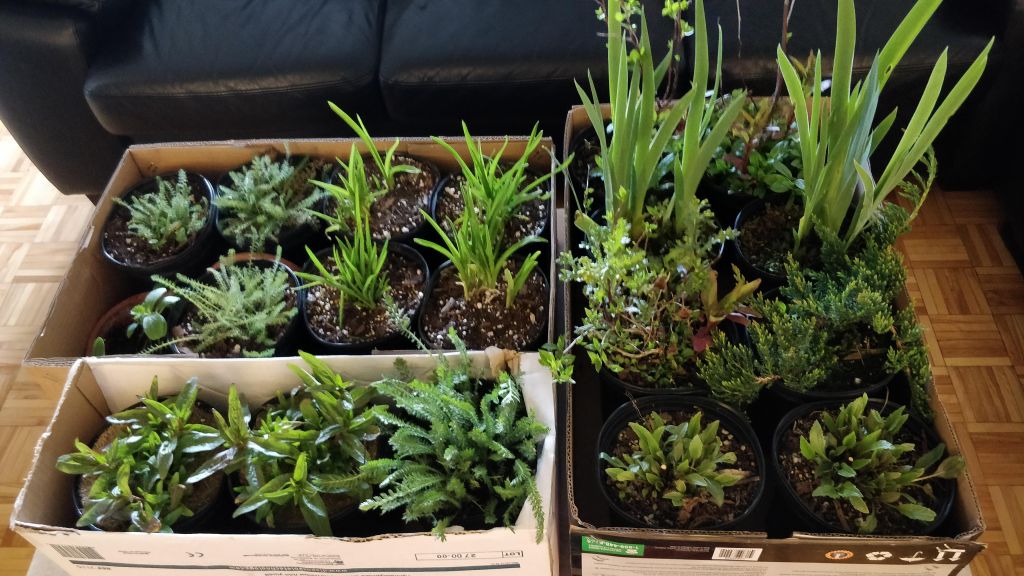
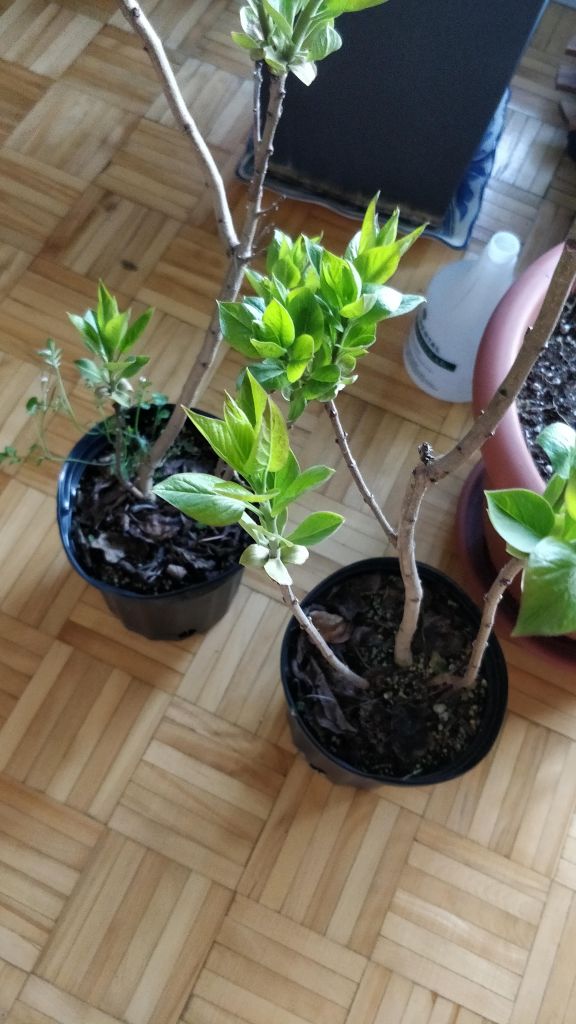
Instead of planning my new garden, I purchased about 20 ornamental plants – lilac trees to irises and hydrangeas to juniper bushes. The plants I bought were not necessarily native to the area (more on native plants later). Needless to say, while some of my new seedlings rooted, many did not. Another tip for gardeners looking to save money on plants – attend gardening events in your community to grow your seed collection, save seeds from prior years to share with others and propagate cuttings from your gardener friends. I’ve learned that the gardening community is the most generous community. Everyone wants each other to succeed!
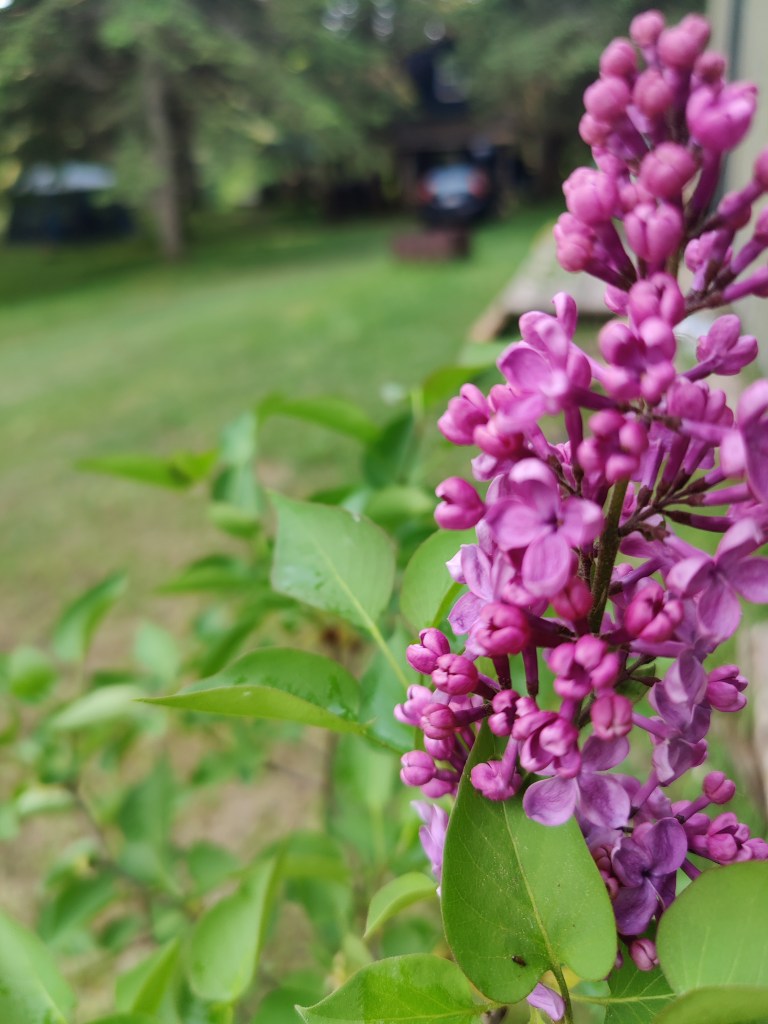
A plethora of plants with a low survival rateFirst lilac bloom. A success after 5 years!