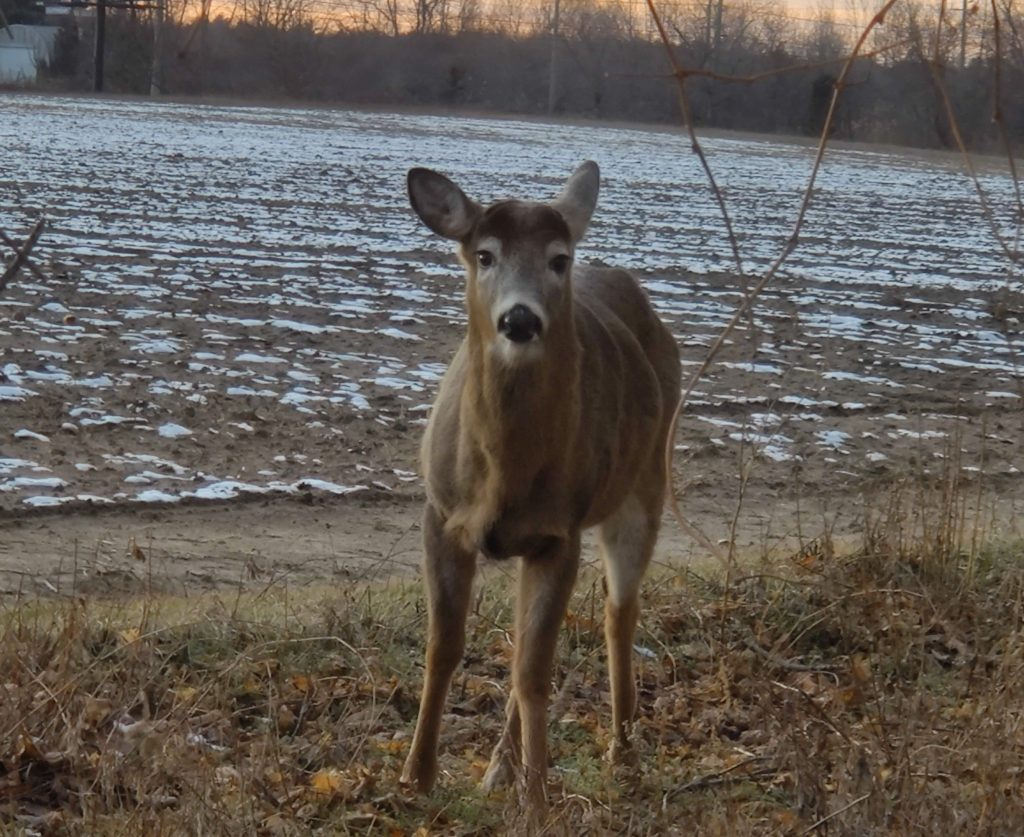
As much as I have depicted my love-hate relationship with deer in my role as a gardener, deer do in fact play an essential role in ecosystems as both herbivores and prey.
Deer Encourage Biodiversity and are Key to the Food Chain
By browsing on plants, shrubs, and trees, deer influence vegetation patterns, helping shape plant communities and maintain biodiversity. Their feeding habits can promote the growth of certain plants by preventing overdominance of others, creating a dynamic balance in forest and grassland ecosystems. Additionally, deer are a crucial food source for predators such as wolves, cougars, and bears, supporting the food web.
Nature’s Seed Dispersal Heroes
Deer also contribute to seed dispersal; seeds can attach to their fur or pass through their digestive system, aiding plant regeneration across wide areas.
However, when deer populations grow unchecked, they can overbrowse vegetation, leading to habitat degradation. This underscores the importance of maintaining predator-prey balance and sustainable deer population levels for a healthy ecosystem.
Conclusion
When populations are well-managed, deer play a vital role in fostering biodiversity, shaping plant communities, supporting predators as prey, and aiding seed dispersal, contributing to a healthy and balanced ecosystem.


Leave a Reply